Why Healing Fails with Dr. Adriana Popescu
We live in a culture obsessed with self-improvement, constantly bombarded with the message that we are broken and need fixing.
But what if that exact mindset is what keeps us stuck?
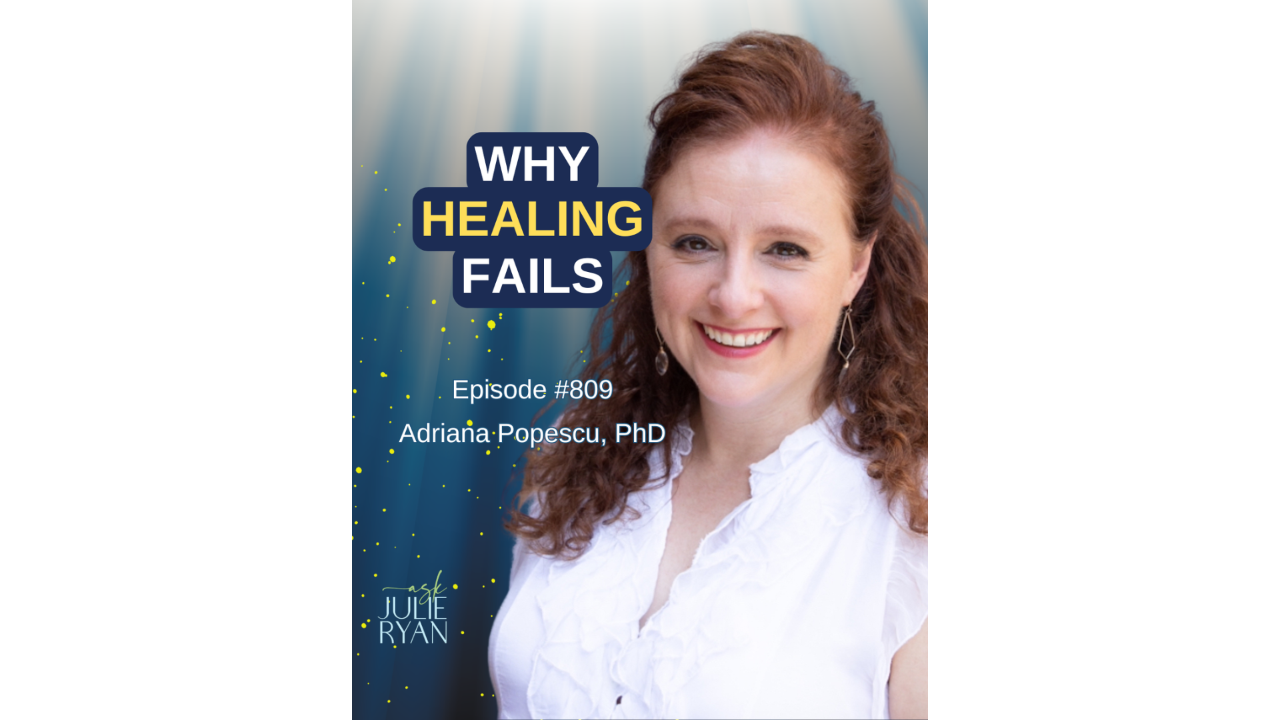
When clinical psychologist and trauma specialist Dr. Adriana Popescu joined host Julie Ryan on episode #809 of Ask Julie Ryan, they flipped the script on traditional healing. Instead of viewing anxiety, depression, or addiction as fundamental character flaws, Dr. Adriana offered a perspective shift that changes everything: True transformation doesn’t begin when you finally fix yourself; it begins when you stop judging yourself for being "broken" in the first place.
The Trap of the Diagnosis
While receiving a mental health diagnosis can bring initial relief, it can easily turn into an identity cage. When we label ourselves as an "anxious person" or an "addict," we solidify those states into our reality. Traditional talk therapy often keeps us hyper-focused on our flaws, reinforcing well-worn neural pathways centered around our limitations rather than our possibilities.
Healing Beyond the Mind
If staying stuck isn't a willpower issue, what is it? Dr. Adriana points to a mix of physiological, ancestral, and energetic roots that logic alone cannot solve:
-
Epigenetics: We inherit more than just eye color; we inherit cellular memories of our ancestors' traumas and survival strategies.
-
The Somatic Connection: Trauma lives in the body and the nervous system, not just the logical mind. This is why you can intellectually understand your past but still experience a physical panic response when triggered.
-
Energy Psychology: Lasting recovery requires holistic tools—like EFT/Tapping and somatic experiencing—that clear energetic blockages and calm the brain's alarm system directly.
Dropping the Armor of Self-Judgment
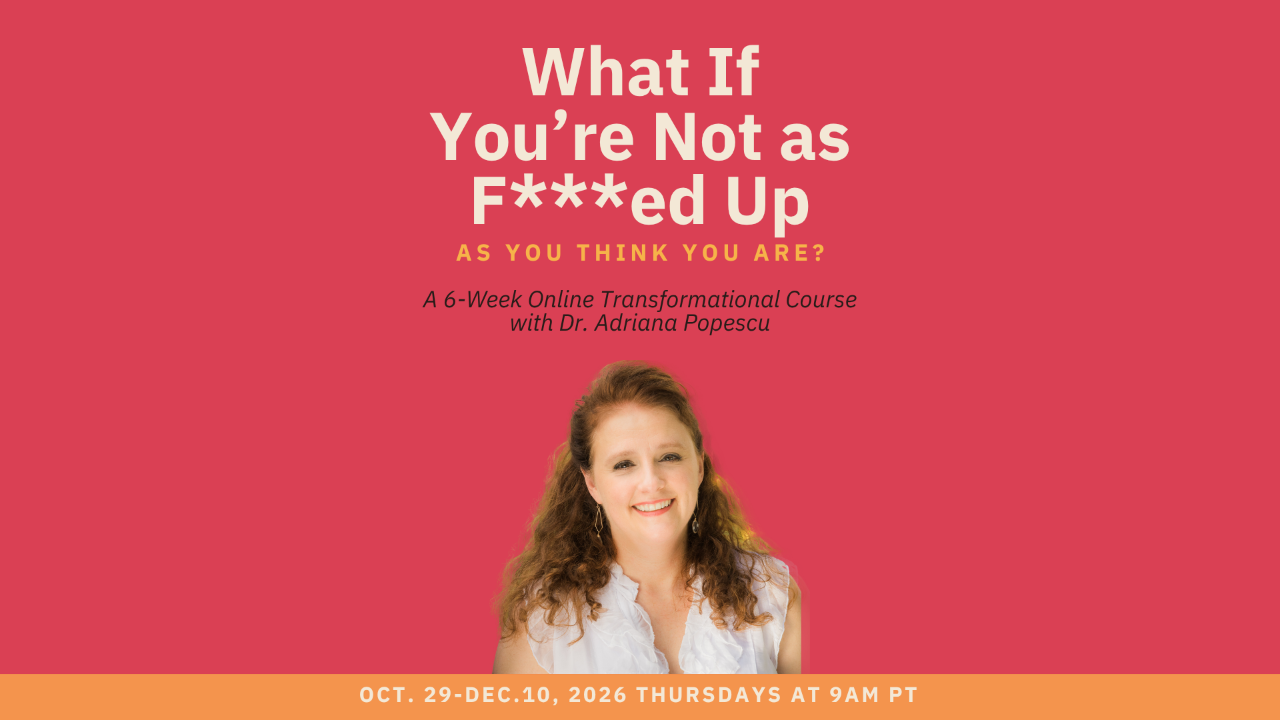
In her book, What If You’re Not As F***ed Up As You Think You Are?, Dr. Adriana shares a liberating truth: Your "flaws" are usually just highly evolved survival mechanisms.
Hyper-vigilance isn't a defect; it’s how a younger version of you kept you safe. Even destructive coping mechanisms often begin as an attempt to soothe unbearable internal pain.
When we shift from “What is wrong with me?” to “How did I learn to survive?”, the heavy blanket of shame lifts. In that space of radical self-compassion, the nervous system can finally drop its guard, step out of fight-or-flight, and allow genuine healing to begin.
Discover more about her book here: https://whatifyourenot.com
Tune in and listen to full episode "Why Healing Fails" on Ask Just Ryan podcast HERE